Railbirds

you+suck

Critics.

All of them.

The people who tell us to give up, are the ones who feel they have failed. But the truth is, the only way to actually fail – is to give up.

This is the speech I give myself each and every time I want to throw in the towel. Life would be so much easier if I stopped trying, because then I wouldn’t have to be disappointed.

The railbirds in our lives add to the perpetual need for an escape plan. The people we thought were our trusted guides turn out to be nothing more than pessimistic and downtrodden folk who love to share their disappointment.

At the end of the day, their supported is about as effective as a ten-year old bra missing it’s underwire.

It’s good to remember that are a product of our decisions – both the ones we make and the ones we avoid. It is an inescapable fact. So is – we can’t really blame the critics for saying what they think, we can only monitor how we react to their words.

If they speak at all.

Sometimes silence is the loudest critic. Not hearing, not receiving feedback, not getting a reply to an email you sent a week earlier. It is the one thing you so desperately desire.

The want is almost crippling.

As writers we are creative folk. We’ve decided to spin and weave and knit facts and fiction together – creating thoughts, emotions, stories, etc. And when you reach out and the person doesn’t reach back… Our stories leap from the computer screen into our head, worst case scenarios on steroids.

How wonderful would it be to be an island? Sadly, needing the help of others along the writers path is inevitable. Simone and Garfunkel are alone again.

This post is an example of me trying to bolster my own psyche as I wait for a return email. My mind has been doing flips for days and the imaginary railbirds I’ve concocted over the years  are drinking pints of ale, mocking me relentlessly.

“Told you, Aryn. You’re writing isn’t worth a dime!” Gin blossomed nose, stale breath, and a rotund disposition. I wonder why I paint myself as a down on your luck hobo circa 1925 when I choose to self sabotage? Oh, Freud… at least it wasn’t my mother.

Alas – it’s back to that “making a choice” moment… and while one little voice tells me its time to give up, turns out I can’t stop myself – even if I try…

The Truth about Happy

431px-Lewis_Hine_Power_house_mechanic_working_on_steam_pump

Nearly five years ago I received my certification as a yoga instructor. If you are familiar with yoga – and I’m talking the institution, not the physicality of it – I’m sure the title of this post tripped an onslaught of quotes and ideas. If you’re unfamiliar – and only know the physical side of the practice, well, there’s a lot more to it.

But this post isn’t about yoga.

This post is about writing.

How? What does yoga and a man repairing a steam pump have to do with writing? (see above image) The answer is – everything.

The truth about being happy is a mixture of balance, hard work, self forgiveness, and persistence. Overall, being happy is actually rather hard. It goes against most things we’ve been taught our entire lives. The world says to act one way, and our instincts tell a whole different story – and this causes struggle.

Where is a great story born from? Struggle.

As a writer I look out into the world to see where a story may lie. I people watch at the beach, or at my son’s school for my next “real” character. I read everything and anything I can get my hands on from classics like Alexandre Dumas’ “The Count of Monte Cristo” to Hiroshi Sakurazaka’s “All You Need is Kill” and than tons of news articles, wiki posts, and random blogs.

I write/edit/plot/conceive/sketch every day.

Every. Single. Day.

Good days. Bad days. All days. Write.

On the bad days – the days I can’t seem to find the “struggle” in my story, but am consumed by it with my writing, I feel like the man above.

This writing world I am part of is a cog in a steam pump, and my job is to maintain it – even when I feel it’s hopeless and will amount to nothing. This is my “writing” life. Filled with strife, struggle, oppression, tears, sweat, and sometimes blood – it’s still mine.

In yoga we are taught  the things we struggle with are what we need the work on the most. Maybe it’s understanding the sutras, or resting in some precarious arm balance – regardless the answers we’re looking for will always be on the other side of that struggle.

In writing our truth lies in the words we put on the page. Maybe today they’re not good. Maybe today they’re actually terrible. But until we accept this is our path – and that our path may not look like the paths of other writers we know, we will never find the answer. We will never know happy.

The truth about being happy  is that sometimes we won’t be.

And the truth about being a writer is that sometimes we need to not be happy so we can try to be great.

So be great. Get out of you own way. Embrace your struggles. And most of all don’t be afraid to grab a wrench and keep on moving.

And so it goes…


Life continues to come at me like small rocks in a dust storm. I take a breath when I think it’s safe, but most days my face is wrapped in a protective layer of fabric as I steer my way though the network of paths before me. Soon I’ll find the right one, or maybe I’ll realize  I’m already on the right path and the storm is just part of the process.

I’ll figure it out.

I always do.

I would like to report I have been working diligently to get my first ever self published short story online! Exciting stuff (to me it REALLY exciting stuff… like “do a little dance of glee in my bedroom between writing/ editing sessions” exciting.) And this has been made possible because of the amazing Michelle Joyce Bond [who also has a blog you should check out! It’s called, “Sleeps with Notebooks“. Go there, tell her I said hi!]

Basically, this post is merely to say thank you to anyone who reads me, who helps me, who feels compelled to keep trying because of me – because you keep me going. Yup. Never give up! Never surrender! Life is too short to live a mediocre life – live one that makes you feel spectacular.

So if you’re on here wasting time because you’re having writers block, or writers angst (which is worse than a block), or you’re scared because you think you’ll never be good enough – go write something. (And then come back and share it with me. I’d love to see it.)

Sometimes those tiny rocks are just thumping you in the head to say, “wake up!” Speaking of which, a new opening chapter to Imogen Grace won’t write itself…

Happy writing!

-Aryn


Writer’s Research

brain-public-domain


At the beginning of every project comes the planning phase. This goes for most things – a new job, a new place to live, or a new book to write. Yes, I know there are some out there who live the life of the “pants-ter” (you know, writing by the seat of your pants), but I’m a fan of the planner path. I prefer to know where my pile of characters want to go before I set out with them.

Either way you decided to write – there is one thing we all have to do, and that is research.

To be honest, I LOVE the research portion of writing. (Sometimes maybe a little too much… lets just say every employee of my local library knows me on sight…) In information age, researching has become both more convenient and riddle with sketchy information. Back in the day of push-carts and horse-drawn trolleys when I was writing research papers I remember receiving the following advice, “Avoid glossies.” What is a glossy bit of research?Think everything you see in the checkout line at your local grocery store. But with the internet these types of rags may be harder to spot. So here are my 4  ways to get the research you need without having to truck it to the library. (Unless you want to, then go ahead, because the library is a wonderful place. An oasis if you will.)

#1 – GOOGLE ALERTS: Who doesn’t love a search engine that does all of the work for you? Select topics you want to know more about and have them send you a daily email. Maybe its advancements in Space Exploration, or maybe it’s your own name (which is great for published authors because you can see who is talking about you). Then you can pick and choose articles to your liking.

#2 – THE RESOURCE SECTION ON WIKIPEDIA: As we all know, anyone can update a Wikipedia page. That said, at the bottom there are three sections that have a pile of breadcrumbs to help you further educate yourself: NOTES; REFERENCES; & EXTERNAL LINKS. Say you really want to write a historic romance set in Stalingrad during the battle of the same name and you think, “What would Stalin be thinking during this time?”

http://en.wikipedia.org/wiki/Joseph_Stalin <-Check out the notes on this guy… 😉

#3 – ONLINE DIGITAL LIBRARIES: I’m still a fan of holding a book in my hand and running my fingers over sheets of paper -but buying books can get expensive, and while I love living in LA – sometimes its hard to find the books I need (and or want) at the local library. Lucky for me there are a ton of great online sites to visit – like Open Library and Google Books – these allow me access to titles I may other wise miss. Other sites that are worth looking into are: New York Public Library, Internet Archive, & University of Pittsburg Digital Library.

#4 – YOUTUBE, TWITTER, TUMBLR, INSTAGRAM, THE INTERNET IN GENERAL: For number four I’m looking at research for Character Development. I live in Los Angeles, but I’m originally from Cleveland – this gives me a general idea of how people talk in both places – but my next book I want to set it the UK. I have a pretty general idea of what a British accent is – I visited once 20 years ago, and I love me some Downton Abbey – but tat can really only take me so far. Dialects change from region, so its nice to hear the cadence of the accent so you can then interpret it into your story. Where do you go? Well, you could go to the UK and spend a ton of money and time traveling from place to place – or – you can go to YouTube: https://www.youtube.com/watch?v=FyyT2jmVPAk And in five minutes you will have a tour of Great Britain in you living room.

Twitter is great because you can check out what’s trending. Writing a YA, but the last time you hung out with a teen was when you were a teen (5, 10, 35 years ago) then go on and see what teens are talking about. Watch their text and how they discuss whatever is popular to them.

Tumblr – the ultimate collection of just about everything. Most blogs are good for this – just search around until you find something that is similar to what you are trying to convey and then read, read, read.

Instagram – what’s it look like under a wave in Hawaii? Follow @ClarkLittle, then you can say, “The water was so clear I could see my friends waiting in the beach just before it crashed on my head…”


Research will make your story rich and opulent in a way doing general guess-work won’t and can’t. We can’t possibly know everything, but we live in an age where we can find things out at a flip of the switch and a press of a button. If you have any great researching ideas, I’d love to hear about them! The more you know, the easier it is to write.

Happy Writing!

Friday in Review: Ham on Rye

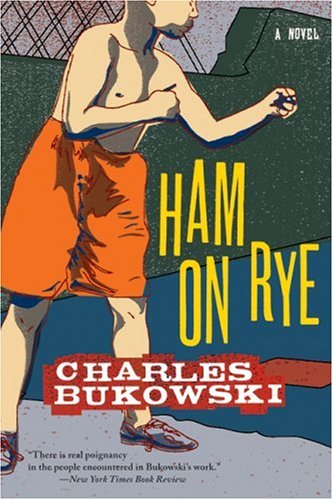
ham on rye


I visited Bukowski’s grave after moving to Los Angeles. It’s in San Pedro, about a 40 minute drive from my apartment. Better yet, my apartment is about a ten minute drive from the house he grew up in. Well, not better for Chuck ‘ol boy – it wasn’t really a happy home.

To put it mildly, I am a Bukowski fan and have been for years. Oddly, Ham on Rye is a book I’ve only read recently (because someone stole my copy). <- true story. The reason it is so odd is Ham on Rye is by far his best book. I liked Factotum, I loved Women and Hollywood, and I was even amused by Pulp (his last book published shortly before his death 20 years ago.) Say what you want about the man – hate him for all I care – but Ham on Rye is one of the most genuine coming of age stories I have read in a very long time. Starting from when he is 3 years old and ending at the beginning of World War II, Bukowski takes on his alter ego “Hank” and tells you his story like it was. (With a little embellishment here and there just to give it that extra flair.)

Are there women? Some.

Is there booze? Of course.

Why is this different from all of his other booze induced, women laced books?  Because it shows you the “why”. Why did he become the man he was? Why did he crawl inside a bottle? Why was he so obsessed with women and words? Every single answer is right there smashed between orange groves, high school angst, the great depression, and trolley rides to and from Pershing Square.

Loud, brash Bukowski is known for getting right in your face and saying, “What the hell are you going to do about it?” That quality is still there, but that’s not what you’re looking for. You’re looking for the spider. The small tiny moments that subsequently mould us into our adult selves.

So that’s why I pick this book. I pick Charles Bukowski for his poetry, for his soul, and for his courage to say out loud all those things that are very easily hidden behind booze and broads. Maybe you’ve read him, or maybe he is new to you – this is the place to start.

Ham on Rye won’t let you down.

“So, that’s what they wanted: lies. Beautiful lies. That’s what they needed. People were fools. It was going to be easy for me.”


Maybe it wasn’t always easy, but it was totally worth it.


Please feel free to recommend books below!


Friday in Review

FRIDAY in REVIEW


There comes a time in every writers life when they must read. Or maybe there comes a time in a reader’s life when they must write – I feel this is similar to the “what comes first, the chicken or the egg” conundrum. One may never know…

But for me, the answer is simple – I was a reader and then at the ripe old age of 7 I became both.

As a writer, finding inspiration is a fundamental necessity to the craft. (& yes, hard work.) Finding a novel that instills the sort of inspiration that not only provides me with the courage to write, but motivate me to improve my craft, is a glorious feat. I have read many books (no, most are not listed on goodreads.) but sadly a lot of them have fallen through the cracked gray matter that is my brain. (If a reader reads a book and doesn’t post it on goodreads, does it still make a sound?)

But for every book that has slipped through my cerebrum, there are the few that stick like thick pancakes to your stomach lining. Each Friday I would like to share one of those books with you. My list of personal favorites. Maybe you will have read them, maybe you haven’t yet – either way I would love to hear your opinion.

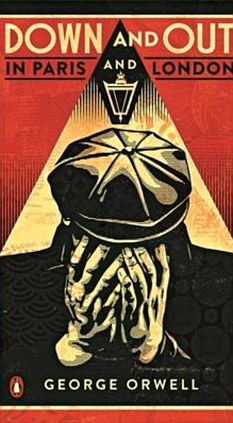
To kick off this new line of blog posts I’m going to start with a wonderful book by George Orwell: Down and Out in Paris and London.

Down & Out in London & Paris


Published in 1933, more than ten years before the acclaimed Animal Farm and sixteen years before Nineteen Eight-Four, Down and Out follows George Orwell as he lives in squalor and sometimes locked up in prison blocks while taking on the life of those in poverty.

Yes, this sounds like a politically based book that shoves a part of the world in your faces most would like to pretend doesn’t exist – but that’s not it’s all about. Yes, there was, and is, an underlining issues of how the poor have been treated through time – but the story is really about the people he meets along the way.

As Orwell bonds with his subjects and they begin to trust him, you are transported to a world filled with lines, crusty bread, broken beds, repugnant bathing water, and incredible and indestructible people deal with the stigmas day in and out – for most of their lives.

Maybe you’ve read Orwell before and are reading this rolling your eyes a mile a minute – but I implore you (before your eyes  lodge themselves in the back of your head) don’t let past experiences sway you from the enlightenment of this novel. There is an easiness to this book, as if you’re sitting at a bar reminiscing with an old friend – a comfort of sorts. And if that isn’t enough you are treated to true craftsmanship in passages like:

Sometimes, he said, when sleeping on the Embankment, it had consoled him to look up at Mars or Jupiter and think that there were probably Embankment sleepers there. He had a curious theory about this. Life on earth, he said, is harsh because the planet is poor in the necessities of existence. Mars, with its cold climate and scanty water, must be far poorer, and life correspondingly harsher. Whereas on earth you are merely imprisoned for stealing sixpence, on Mars you are probably boiled alive.

or

Being a beggar, he said, was not his fault, and he refused either to have any compunction about it or to let it trouble him. He was the enemy of society, and quite ready to take to crime if he saw a good opportunity. He refused on principle to be thrifty. In the summer he saved nothing, spending his surplus earnings on drink, as he did not care about women. If he was penniless when winter came on, then society must look after him. He was ready to extract every penny he could from charity, provided that he was not expected to say thank you for it. He avoided religious charities, however, for he said it stuck in his throat to sing hymns for buns. He had various other points of honour; for instance, it was his boast that never in his life, even when starving, had he picked up a cigarette end. He considered himself in a class above the ordinary run of beggars, who, he said, were an abject lot, without even the decency to be ungrateful.

A fantastic read, and if you happen to have an eReader, chances are you can download a copy for free from your local library – or you can read it online at -> http://www.george-orwell.org/Down_and_Out_in_Paris_and_London/0.html.


Happy reading! Happy writing! Happy Friday!

If you have any books you love and would like to recommend them to me, please list them in the comments below.

Time Stop

Image

the rocket blasts off

in my living room

while I sit waiting

for time

misuse & mismeasured

it slips past me

as I grapple

with air

hindsight hovers

in my mind

mocking me

with how I could

have done everything

-yet didn’t-

& here I am…


a train barrels past

& a snail flies by

everything strewn across

the floor

heavy sighs

little voice

-time is subjective-

yet it weights on me

like a cinder block

pushing me down into 

the depths of life

drowning in a sea

of possibilities

that will look more

promising – behind me

they they ever did – in front


more rockets, an action figure

or two zoom by

sinister music – hummed

can only mean

pearl isn’t far off

& he jumps on me

little hugs

tiny kisses

& suddenly nothing 

matters in the

world 

Beyond – poem

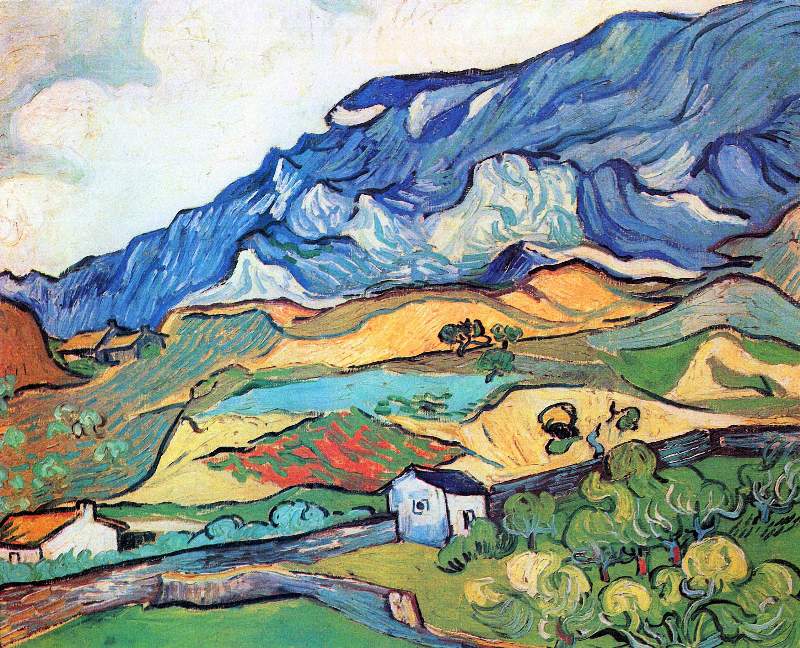
Les Alpilles, a mountain landscape near Saint-Remy by Van Gogh

Beyond

There is a life

beyond these walls

a world

a song

a light, so bright

it will blind us all

with one glace

but we hide

in the darkness

of mundane

hoping for change

wishing for it

but never wanting to

break the smallest sweat

There is a life beyond this one

& it waits in the city

& it waits in the pastures

& it waits in the gutter

on the side of the road

choices – all of them

even the ones

we pretend we never

really had to make

they cry out in the night

and in the day

all hours

if only we would

stop & listen

out there

& it is not defined

by the shadow we

refuse to release

or the melodies that

illuminate favorite moments

it is pure

it is true

it is the person you forgot

you were always meant

to be

harmoniously, you

in all the glitter

and gold

there is

peace

There is a life

beyond this one

waiting, patiently

like you never knew

someone could wait

because it wants you

it wants you there

so let go of the anchors

& swim into

the abyss

Always remember

that every moment is life

when you are grateful

you are free

thought process

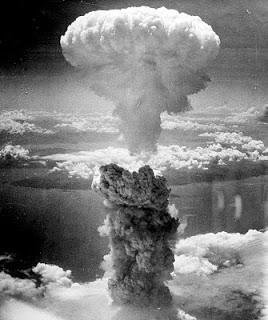
Atomic-bomb-attack-on-Nagasaki

To over think
every thought
would be a waste of time
yet here I am
thinking
about everything
so much
it swirls
around
and around
and around
pulling me past
myself
alone
Most certainly lost
in the sea disdain
a lack of trust
and the lack of
control
for myself
with myself
a butterfly effect
chaos at
its best
as the pretty pictures
storm the gate
leaving me
a pile of wreckage.

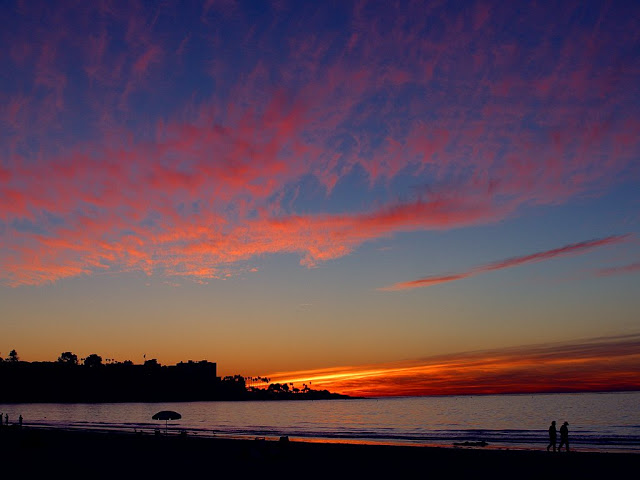
sunset

sunset_3_bg_111602

be that as it may
I would still like a
recount
a recheck
a redo
I would like
a moment
of peace
of quiet
I would love
to sleep
for hours
as the fan spins
and spins
and the child sings
along
be that as it may
it would be nice
a moment
flowing on
floating by
it would be nice
a sunset
blue and pink
purple and gold
I would love
to trip
into something
and twirl around
and around
and around
and around
till the sun blurred yellow
and the ground green and brown
because truth isn’t always true
and right isn’t always just
and be that as it may
I’d rather
enjoy
what’s left